
An area rug warms up a hardwood floor and protects it from scuffs. But that same rug can trap dust, moisture, and grit against the wood underneath. Clean it the wrong way, and you risk water stains, warped boards, or a dull, cloudy finish that costs hundreds to repair.
Most people just vacuum the top and call it done. The dirt sitting in the fibers keeps grinding into your floor every time someone walks across it.
This guide shows you exactly how to clean area rug on wood floor surfaces without damaging the rug or the boards below. You’ll learn the right order, the right tools, and the moisture limits that keep your hardwood safe. Follow these steps, and both your rug and your floor stay clean, dry, and looking sharp.
Why This Matters
A neglected rug acts like sandpaper on your floor. Trapped grit scratches the finish with every step. Trapped moisture is worse — it seeps through to the wood, lifts the finish, and warps the boards. Refinishing a hardwood floor runs $3 to $8 per square foot. A few good cleaning habits cost you almost nothing.
Clean rug care protects two investments at once. You extend the life of the rug fibers and shield the floor finish underneath. You also stop the slow buildup that dulls hardwood and traps allergens in your home.
Here’s the bigger payoff: you learn how moisture and wood interact. That knowledge guards every wood surface you own. Master rug cleaning once, and you handle spills, deep cleaning, and seasonal maintenance with full confidence.
Tools and Materials You’ll Need
Gather everything before you start. A clean job moves fast when supplies sit within reach.
- Pull dry dirt from fibers: vacuum with adjustable height settings
- Lift the rug off the floor: two people or a sturdy grip
- Wash the rug surface: mild pH-neutral rug shampoo or dish soap
- Apply cleaner evenly: soft-bristle brush or sponge
- Treat spots fast: clean white cloths
- Dry the wood instantly: dry microfiber towels
- Protect the floor: plastic sheeting or a drop cloth
- Rinse without flooding: spray bottle filled with clean water
- Cushion and protect: a breathable rug pad
- Optional — speed up drying: a portable fan or dehumidifier
Skip harsh solvents, bleach, and steam cleaners on wool or natural fibers. Test any cleaner on a hidden corner of the rug first. Watch for color bleeding or fiber damage before you treat the whole surface.
Step-by-Step Guide on How To Clean Area Rug on Wood Floor
Step 1 – Move and Inspect the Rug
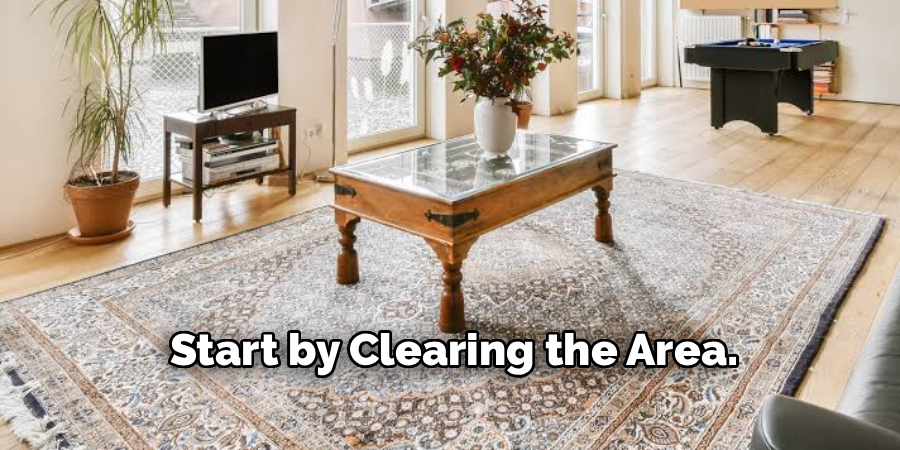
Start by clearing the area. Move furniture off the rug, then roll or fold it back to expose the floor underneath.
Look at the wood right away. Trapped dust, fine grit, or faint dark patches tell you moisture has been sitting there. A musty smell means trouble — that’s a sign of damp fibers pressing against the finish.
Check the rug too. Note any stains, worn spots, or loose threads before you wash. Knowing how to clean area rug on wood floor setups starts with this inspection, because the floor’s condition decides how careful you need to be with water.
If the wood feels damp or cupped, dry it fully before you put any rug back down.
Step 2 – Vacuum Both Sides Thoroughly
Dry dirt comes out first. Wet a dirty rug, and you turn loose grit into stubborn mud ground deep into the fibers.
Run the vacuum slowly across the top, overlapping each pass. Set the height so the brush touches the pile without dragging hard. You’ll hear the motor pitch change as it pulls trapped debris loose.
Flip the rug and vacuum the back. Most people skip this, but the underside holds the grit that scratches your floor. You’ll see a surprising amount of dust come up.
Finish by vacuuming the exposed wood floor. Clear every speck before you reach for water. A clean, dry start makes every later step faster and safer for the boards.
Step 3 – Protect the Wood Floor
Never wash a rug directly on bare hardwood. Water and wood don’t mix, and pooled moisture finds its way into seams fast.
Move the rug off the floor entirely if you can — a garage, patio, or driveway works well. When that’s not possible, lay down plastic sheeting or a thick drop cloth and place the rug on top.
Tape the edges of the plastic to catch runoff. You want a clear barrier between every drop of water and the floor finish. Run your hand along the sheeting to check for gaps.
This step is the core of how to clean area rug on wood floor safely. Get the barrier right, and you remove the biggest risk to your hardwood before a single drop falls.
Step 4 – Spot Treat Stains First
Tackle stains before the full wash. Treated early, most lift completely. Ignored, they set and turn permanent.
Mix a few drops of mild dish soap into a cup of cool water. Dip a clean white cloth, wring it nearly dry, and blot the stain. Press straight down — don’t rub. Rubbing spreads the stain and frays the fibers.

Work from the outside edge toward the center to stop the spot from spreading. You’ll watch the color transfer onto your cloth with each press.
Switch to a clean section of cloth often. For tougher marks, let the soapy solution sit for five minutes, then blot again. Check your progress in good light before moving to the full clean.
Step 5 – Wash the Rug Surface
Now clean the whole rug. Mix pH-neutral rug shampoo with cool water following the label ratio. Too much soap leaves residue that attracts dirt later.
Dip a soft-bristle brush and work the solution into the fibers using gentle circles. You’ll see light suds form and feel the pile loosen under the brush. Work in sections so no area dries before you rinse it.
Keep the brush moving with the grain of the pile, not against it. Scrubbing too hard mats wool and breaks down natural fibers. Light, steady strokes do the real work.
Watch the water in your bucket darken — that’s the dirt leaving the rug. Refresh your solution when it turns cloudy.
Step 6 – Rinse Without Soaking
Soap left behind stiffens fibers and draws in new dirt. Rinse it all out, but don’t flood the rug.
Fill a spray bottle with clean water and mist the surface section by section. Blot with a clean cloth or sponge to pull the suds out. Repeat until the cloth comes up clear and the water runs soap-free.
Press down to lift moisture as you go. A heavy, waterlogged rug takes days to dry and risks mildew. You want the fibers damp, never dripping.
Run your fingers through the pile. It should feel clean and slightly slick-free, with no soapy film. If it still feels filmy, rinse that spot again until the residue disappears.
Step 7 – Dry the Rug Completely
Drying makes or breaks the whole job. A rug returned damp traps moisture against your floor and breeds mildew within days.
Lay the rug flat in a sunny, breezy spot or drape it over a railing. Press dry towels into the pile to pull out water, then flip the rug to dry the back. You’ll feel the fibers go from cool and damp to dry and springy.
Point a fan at it to speed things up, or run a dehumidifier indoors. Most rugs need 24 to 48 hours to dry fully.
Check the underside before you call it done. A cool, slightly damp back means it needs more time. Patience here protects your hardwood.
Step 8 – Clean and Dry the Floor
While the rug dries, finish the floor. Wipe the exposed wood with a barely damp microfiber cloth to lift any leftover grit or cleaner.
Dry it immediately with a fresh towel. Standing water, even a thin film, dulls the finish and seeps into seams. Work with the grain and check the boards in angled light for streaks or cloudy spots.
Let the floor air out for an hour before the rug goes back. Tilt your head and look across the surface — it should look even and feel completely dry to the touch.
Address any cupped or stained boards now. A clean, dry floor is the foundation for everything you just cleaned.
Step 9 – Add a Rug Pad and Reposition
Don’t put a rug back down bare. A breathable rug pad cushions the fibers, grips the floor, and lets air flow underneath.
Skip rubber-backed or solid PVC pads on hardwood. They trap moisture and can react with the finish, leaving discolored marks you’ll struggle to remove. Choose a natural felt or rubber-mesh pad instead.
Center the pad on the floor, then lay the dry rug over it. Smooth out any ripples with your hands. The rug should sit flat with no curled edges to catch a foot.
Step back and check the alignment. A properly padded rug feels firm underfoot and stays put, protecting your hardwood for years.
Common Mistakes to Avoid
The biggest mistake is using too much water. Hardwood and moisture are enemies. Soaking a rug on or near the floor lets water seep into seams, lift the finish, and warp the boards. Always work with damp tools, never dripping ones, and dry every surface fast.
Washing the rug directly on the floor ranks second. Even careful cleaning sends water through to the wood. Move the rug outside or lay down a waterproof barrier every single time. No exceptions.
Returning a damp rug is another costly error. The underside feels dry while the core stays wet, and that trapped moisture breeds mildew and stains your floor. Give the rug a full 24 to 48 hours, and check the back before it goes down.
Using a rubber-backed pad seems smart but backfires. Solid rubber and PVC trap humidity against the wood and react with the finish, leaving cloudy marks. Choose a breathable felt or natural-rubber mesh pad instead.
Finally, many people scrub too hard or skip the spot test. Aggressive brushing mats fibers, and an untested cleaner can bleach colors. Test on a hidden corner, then use light, even strokes throughout.
Expert Tips
Vacuum the rug’s underside every time you clean. The back collects the grit that scratches your floor, and most people never touch it. This one habit doubles your floor protection.
Rotate the rug 180 degrees every few months. Sun and foot traffic fade and wear rugs unevenly. Rotating spreads the wear and keeps the colors consistent across the whole surface.
Lift the rug edges weekly to let the floor breathe. Trapped humidity is the silent killer of hardwood under rugs. A quick lift releases moisture before it can do damage.
For wool or antique rugs, skip DIY washing on anything valuable. Water and the wrong cleaner can shrink wool or bleed dyes permanently. Hand-clean spots only, and send the full rug to a pro.
Choose a felt rug pad sized two inches smaller than the rug on each side. It stays hidden, grips well, and lets air flow at the edges.
Frequently Asked Questions
How Often Should I Clean an Area Rug on a Wood Floor?
Vacuum the rug weekly and the floor underneath monthly. Lift the rug edges weekly to release trapped moisture. Deep clean the full rug once or twice a year, or more in high-traffic areas. Spot treat spills the moment they happen. This routine keeps grit and moisture from damaging both the rug fibers and the hardwood finish beneath them.
Can I Steam Clean a Rug on Hardwood Floors?
No, not directly on the floor. Steam forces hot moisture deep into fibers, and that water seeps into hardwood seams, warping boards and lifting the finish. If you steam clean, do it off the floor on a waterproof surface, then dry the rug fully for 48 hours before returning it. Even then, skip steam on wool or natural fibers, which can shrink.
What Kind of Rug Pad Is Safe for Wood Floors?
Choose a breathable felt or natural-rubber mesh pad. These cushion the rug, grip the floor, and let air flow underneath. Avoid solid rubber, PVC, or adhesive-backed pads. They trap moisture against the wood and can react with the finish, leaving cloudy or discolored marks that are hard to remove. Size the pad about two inches smaller than the rug on each side.
How Long Does an Area Rug Take to Dry?
Most rugs need 24 to 48 hours to dry completely. Thick wool or large rugs can take longer. Speed it up with sunlight, good airflow, a fan, or a dehumidifier. Dry both sides and check the underside before returning the rug, since the core stays damp longest. A damp rug traps moisture against your floor and breeds mildew fast.
What Should I Do If Water Stains the Wood Floor?
Act fast. Wipe up any standing water immediately and dry the spot with a clean towel. For light surface stains, buff with a barely damp cloth, then dry fully. Dark stains mean moisture reached the wood, which may need light sanding and refinishing of that section. Prevent stains by always using a moisture barrier and never washing a rug directly on the floor.
Conclusion
Cleaning a rug on hardwood comes down to one rule: keep water away from the wood. Vacuum both sides first, protect the floor with a barrier, wash and rinse the rug off the boards, then dry it completely before it goes back. Add a breathable felt pad, and you cushion the rug while letting the floor breathe. Each step protects two investments at once.
The payoff is real. You extend the life of your rug fibers, shield your floor finish, and skip the steep cost of refinishing warped or stained boards. You also learn how moisture and wood interact, knowledge that guards every wood surface in your home.
You now know how to clean area rug on wood floor setups the safe way, from the first vacuum pass to the final drying check. Don’t let trapped grit and moisture do quiet damage. Work dry, dry fast, and choose the right pad. Treat your rug and floor with care, and both stay clean, sound, and beautiful for years.
