
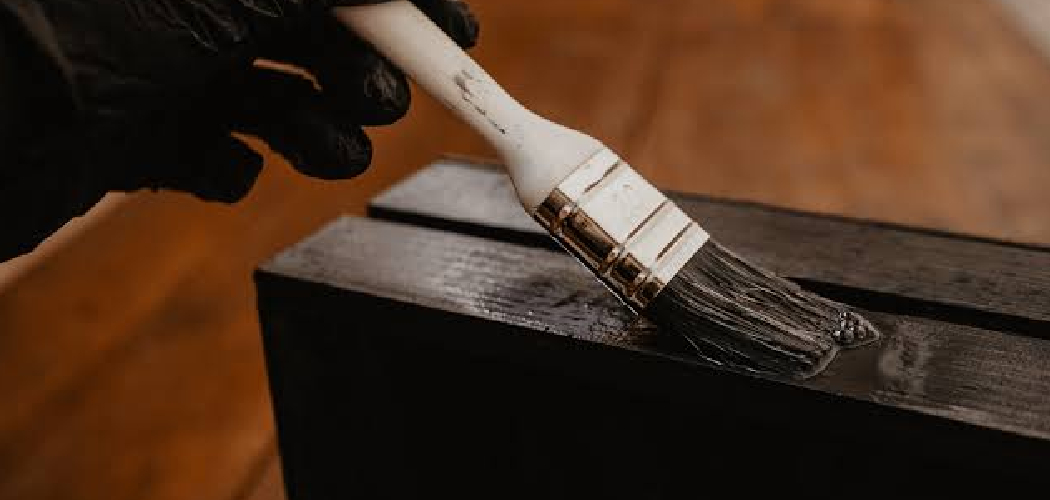
You finished staining your new bookshelf, and now your whole room smells like a paint factory. That sharp, chemical odor lingers for days, sometimes weeks. It can trigger headaches, irritate your lungs, and make a space unusable. The good news? You can fix it. Knowing how to get rid of wood stain odor turns a frustrating problem into a quick, manageable task. Stain fumes come from solvents and VOCs that release into the air as the finish cures. Once you understand the process, clearing them out becomes simple. This guide walks you through every step to neutralize stain smell, speed up curing, and breathe easy around your projects again.
Why Eliminating Wood Stain Odor Matters
Stain odor is more than a nuisance. Those fumes carry VOCs—volatile organic compounds—that can cause dizziness, nausea, and respiratory irritation. Removing them protects your health and the people around you.
For DIY beginners, this skill saves money. You avoid hiring professionals or scrapping a project because the smell won’t quit. You also build confidence. When you control the curing process, you finish faster and move on to the next build.
There’s a craftsmanship angle too. Proper off-gassing means your finish cures evenly and hardens correctly. Rushing it or trapping fumes leads to a soft, tacky surface that fails early. Mastering odor removal extends the life of your wood projects and keeps every piece looking sharp for years.
Tools and Materials You’ll Need
Gather these before you start. Most are cheap and already in your home.
- Box fans or oscillating fans – move air across the wood surface
- Activated charcoal – absorbs solvent smell from enclosed spaces
- Baking soda – a natural odor neutralizer for furniture and drawers
- White vinegar – cuts through stubborn wood finishing odor
- Bowls or shallow containers – hold your absorbers near the project
- Ground coffee – masks and absorbs lingering fumes
- Plastic sheeting or a tarp – contains off-gassing in a controlled area
- Respirator or N95 mask – protects your lungs during cleanup
- Onions, sliced in half – an old-school trick that pulls chemical smells from the air
- Air purifier with a carbon filter (optional) – speeds up stain smell removal in living spaces
Step-by-Step Guide on How to Get Rid of Wood Stain Odor
Step 1 – Move the Project to a Ventilated Space
Get the wood outside or into a garage with open doors. Fresh air is your fastest tool for how to get rid of wood stain odor. The more air circulation, the quicker those fumes dissipate.
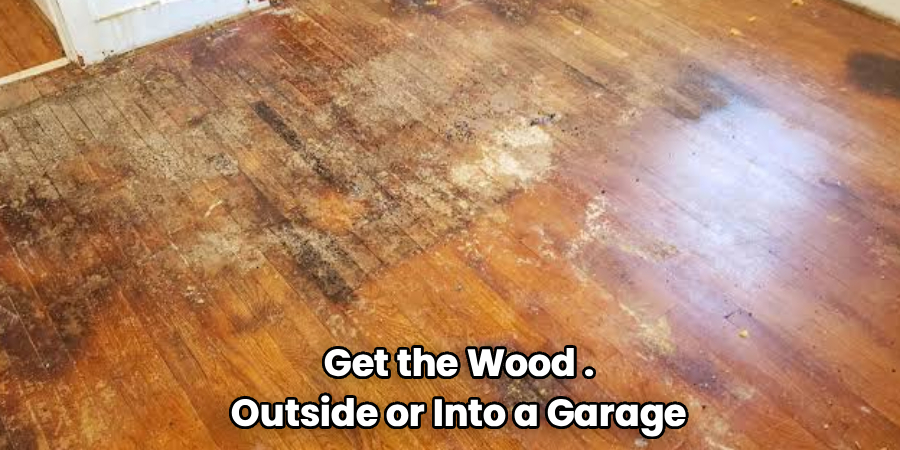
Pick a spot out of direct sunlight. Harsh sun can heat the finish too fast, leaving a sticky, uneven surface. You want steady airflow, not a heat blast.
Listen for the hum of a breeze or set up a fan. If the air feels still and the chemical smell hangs heavy when you walk in, ventilation isn’t working yet. A well-aired space smells faintly of stain, not overwhelmingly. Give the wood room on all sides so air reaches every face.
Step 2 – Set Up Cross Ventilation
One open window won’t cut it. You need air moving through, not just sitting. Open two windows or doors on opposite sides of the room to create a path for fumes to escape.
Position a box fan in one opening, blowing outward. This pulls stale, solvent-heavy air out while fresh air rushes in behind it. You’ll feel the draft on your skin within seconds.
Watch for a steady current. If a tissue held near the window flutters, your airflow is strong. If it stays limp, reposition the fan. Cross ventilation slashes curing time and clears VOCs faster than any absorber alone. This is your foundation for stain smell removal.
Step 3 – Place Activated Charcoal Around the Wood
Activated charcoal is a powerhouse odor absorber. Its porous surface traps solvent molecules straight out of the air. Pour it into shallow bowls and set them close to the stained surface.
For a dresser or cabinet, tuck a bowl inside each drawer and shut it. The enclosed space concentrates the fumes, and the charcoal soaks them up overnight.
Check the wood the next morning. Run your hand near the surface and breathe in. A faint, fading scent means it’s working. A still-sharp chemical bite means you need more charcoal or more time. Replace the charcoal every two to three days until the smell drops. It won’t damage the finish, so keep it in place.
Step 4 – Use Baking Soda to Neutralize Odors
Baking soda doesn’t mask smells—it neutralizes them. It reacts with acidic fume compounds and pulls them out of the air. Sprinkle it generously inside drawers, cabinets, and enclosed wood pieces.
For larger surfaces, fill open containers and arrange them around the project. Leave them for 24 to 48 hours.
When you check back, sniff the baking soda itself. If it smells like stain, it’s pulling fumes and needs replacing. The wood should smell noticeably milder. Vacuum up any loose powder once you’re done—don’t wipe it across a soft finish, since granules can scratch. Baking soda costs almost nothing and works on both oil-based stain and water-based stain odors.
Step 5 – Try the Vinegar Bowl Method
White vinegar tackles fumes that charcoal and baking soda miss. Its acidity breaks down lingering solvent smell in the air.
Fill several bowls with vinegar and place them around the room or near the wood. The vinegar smell will be strong at first, but it fades within hours and takes the stain odor with it.
Leave the bowls out overnight. By morning, both the vinegar and stain smells should be much weaker. If the chemical odor returns once the vinegar evaporates, set out fresh bowls. This method shines in closed rooms where you can’t open windows. Don’t pour vinegar directly on the wood—it can dull or etch certain finishes.
Step 6 – Run Fans Continuously
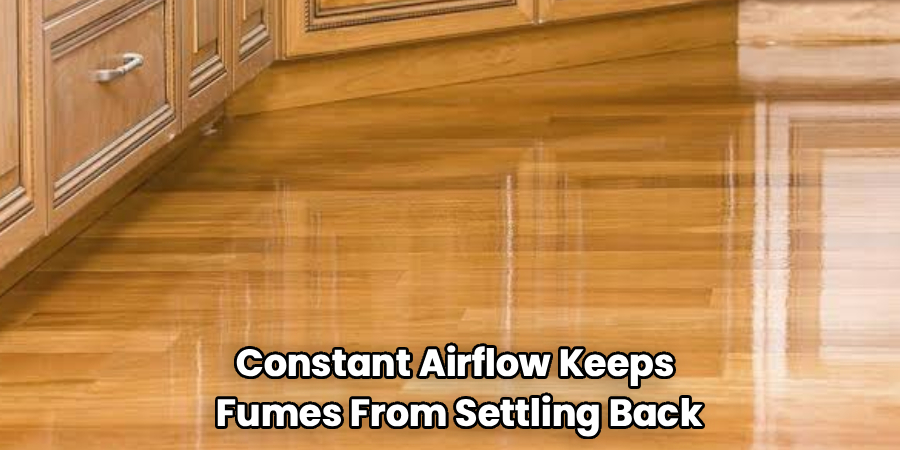
Constant airflow keeps fumes from settling back onto the wood. Set your fans to run nonstop while the stain cures. Steady movement carries off-gassing VOCs away before they build up.
Aim one fan across the surface and another toward an open window. You’ll hear the steady whir and feel the air moving. That sound means progress.
Check the surface texture as it cures. A properly drying finish feels dry to a light touch and smells fainter each day. A tacky, gummy surface that still reeks means airflow is too weak or the coat went on too thick. Keep the fans running for several days until the wood feels hard and the smell nearly disappears.
Step 7 – Add Natural Absorbers for Stubborn Smells
When fumes won’t quit, layer in natural absorbers. Ground coffee, sliced onions, and bowls of water all pull lingering odor from the air.
Spread ground coffee in shallow dishes near the wood. It absorbs solvent smell and leaves a mild roasted scent behind. Halved onions work surprisingly well too—they grab chemical fumes overnight, though you’ll want to toss them by morning.
Set these around the project and wait. The next day, the air should feel cleaner and the sharp edge of the odor should be gone. If the smell still bites, the finish may need more curing time. Combine these tricks with steady ventilation for the best results.
Step 8 – Give the Finish Time to Cure
Patience finishes the job. Even with perfect ventilation, stain needs time to fully cure and stop off-gassing. Oil-based stains can take a week or more. Water-based stains cure faster, often within a few days.
Resist the urge to use or move the piece too early. Touch a hidden spot. If it feels dry, hard, and odorless, the cure is complete. If it’s soft or smells sharp, give it more time.
A fully cured finish carries almost no scent and resists fingerprints. Knowing how to get rid of wood stain odor partly comes down to letting chemistry run its course. Rushing leads to a soft surface that smells for weeks longer than it should.
Common Mistakes to Avoid
The biggest mistake beginners make is working in a sealed room. Stain needs airflow to cure. Trap the fumes indoors with windows shut, and you’ll battle that smell for weeks while the finish stays tacky. Always ventilate before, during, and after staining.
Another common error is applying stain too thick. A heavy coat takes far longer to off-gas and traps solvent deep in the wood. Wipe off excess stain with a clean rag a few minutes after application. Thin, even coats cure faster and smell less.
Many people also rely on masking instead of neutralizing. Spraying air freshener or burning candles only hides the odor temporarily—the VOCs are still there. Use real absorbers like activated charcoal and baking soda that pull fumes from the air.
Skipping protective gear is risky too. Stain fumes irritate your eyes and lungs. Wear a respirator and work in fresh air.
Finally, don’t rush the cure. Moving a piece into a closed bedroom before it’s done fills that room with fumes. Wait until the wood feels hard and the smell fades before bringing it inside.
Expert Tips
Warmth speeds curing. Keep your workspace between 65 and 75°F. In cold conditions, stain cures slowly and fumes linger far longer—a heated garage beats a freezing one every time.
Choose your product wisely before you ever brush it on. Water-based stains release fewer VOCs and clear faster than oil-based options. For indoor projects, look for low-VOC or “low-odor” formulas on the label.
Pros also seal the finish once it cures. A topcoat of polyurethane locks in any residual smell and hardens the surface. Just make sure the stain is fully dry first, or you’ll trap fumes underneath.
One last trick: run a dehumidifier alongside your fans. Lower humidity helps solvents evaporate faster, cutting your total curing and deodorizing time.
Frequently Asked Questions
How Long Does Wood Stain Smell Last?
Most stain odor fades within two to three days with good ventilation. Oil-based stains can linger up to a week or longer, while water-based stains clear faster. Thick coats, cold temperatures, and poor airflow all extend the smell. Keep fans running and use absorbers like activated charcoal to speed things up. Once the finish fully cures, the odor disappears almost completely.
Is Wood Stain Smell Dangerous to Breathe?
Yes, in high concentrations. Stain fumes contain VOCs that can cause headaches, dizziness, nausea, and respiratory irritation. Short exposure in a ventilated space is usually mild, but prolonged exposure in a closed room is harmful. Always wear a respirator while staining and keep air circulating. People with asthma, children, and pets are especially sensitive, so keep them away until the smell clears.
Does Vinegar Really Remove Stain Odor?
Vinegar works well as an odor neutralizer. Its acidity breaks down airborne solvent compounds rather than just masking them. Set bowls of white vinegar around the room and leave them overnight. The vinegar smell fades within hours, taking much of the stain odor with it. Don’t apply vinegar directly to the wood, though—it can dull or etch certain finishes. Use it only in open containers nearby.
Can I Speed Up the Curing Process?
Yes. Increase air circulation with fans, keep the room warm between 65 and 75°F, and lower humidity with a dehumidifier. Apply thin, even coats instead of thick ones, since heavy layers cure slowly. Water-based stains also cure faster than oil-based ones. These steps reduce both curing time and off-gassing, which means the smell clears sooner and your finish hardens properly.
What’s the Best Natural Odor Absorber for Wood?
Activated charcoal is the most effective natural absorber. Its porous structure traps solvent molecules straight from the air. Baking soda works as a strong second choice and neutralizes fume compounds. Ground coffee and sliced onions also pull odors overnight. Place any of these in shallow bowls around your project, replace them every few days, and combine them with steady ventilation for the fastest deodorizing results.
Conclusion
Stain odor doesn’t have to ruin your project or your space. With the right approach, you can clear those fumes fast and breathe easy again. Start with strong ventilation—open windows, run fans, and create cross airflow to carry VOCs out. Add absorbers like activated charcoal, baking soda, and vinegar to neutralize what’s left. Apply thin coats, keep your workspace warm, and give the finish time to fully cure.
These steps protect your health, save you money, and produce a harder, longer-lasting finish. Each project you complete builds your confidence and sharpens your craft. Now that you know how to get rid of wood stain odor, you can tackle any staining job without dreading the aftermath. Set up your fans, place your absorbers, and let the wood cure properly. Your next bookshelf, table, or cabinet will smell clean and look beautiful—ready to use and built to last.
